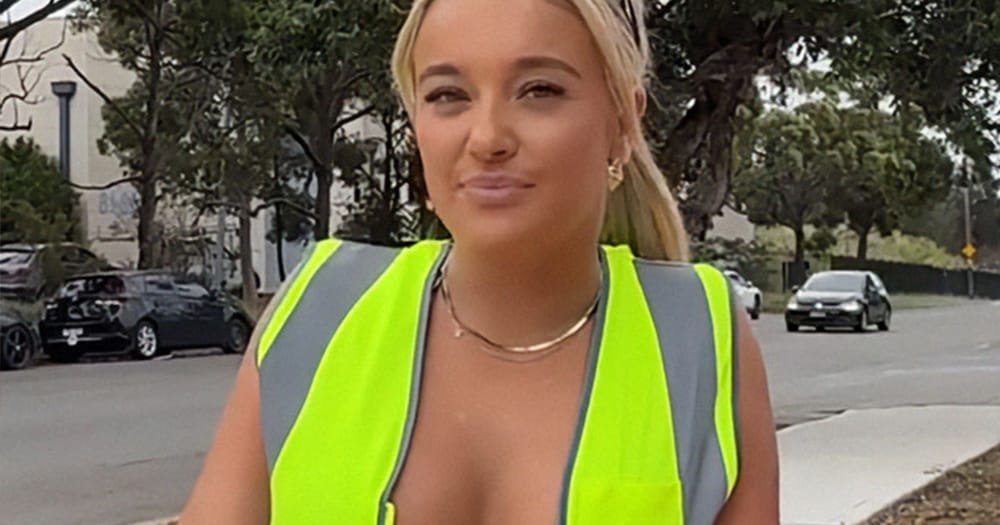
In the sociopolitical landscape of the 21st century, the fight for gender equality has moved from the boardroom to the ballot box, and now, to the blistering heat of the Australian construction site. A decade of covering labor and gender dynamics has taught me that the most explosive debates often start with a single, localized spark. In this case, that spark is Fox, a Sydney-based landscaper who has set social media ablaze by challenging one of the last visible double standards in the blue-collar sector. The premise of her argument is as raw as the 40-degree (104°F) Sydney sun: If the “boys” on-site can peel off their shirts to survive the relentless Australian heat, why is she legally and socially mandated to stay covered?
“It’s a 40-Degree Day”
Anyone who has spent a day under the uncompromising glare of the sun on a road crew or a construction site understands that heat is not merely an inconvenience—it is a physiological adversary. Historically, the image of the shirtless, tanned road worker was a staple of the Australian summer. While modern OH&S (Occupational Health and Safety) regulations and sun-safety awareness have reduced the frequency of shirtless labor, the practice persists among male “tradies” (Australian slang for tradespeople) looking for a reprieve from the humidity.
“It’s a f—ing 40-degree day today and I’m the one who has to wear my shirt, while all the boys on-site don’t have to wear theirs,” Fox vented in a viral video. Her frustration centers on the rationale often used to keep women covered: the fear of “distracting” her male counterparts. To Fox, this is not just an issue of comfort; it is a blatant manifestation of sexism.
Natural Form vs. Professional Standards
Fox, who has spent over four years navigating male-dominated trades and often opts for a bikini top to mitigate the heat, argues that her request is rooted in common sense rather than provocation. She posits that breasts are “natural” and that the onus of professionalism should fall on those who are distracted, rather than those seeking relief.
“If you’re going to be childish and feel like they’re going to be distracting, then you should just grow up,” she told News.au.com.
However, the intersection of her trade work and her presence on adult content platforms has added a layer of complexity to the discourse. While she suggests her bold stance might encourage more women to break into the industry by showing they can “stand their ground,” the backlash has been swift—particularly from other women in the trades.
The Internal Rift: A Threat to Credibility?
Perhaps the most significant development in this story is the divide among female tradespeople. For many women who have fought for years to be taken seriously in a 12:1 male-to-female industry, Fox’s approach is seen as a setback.
“She does not speak for us female tradies,” one worker commented, echoing a sentiment that Fox’s viral videos might undermine the hard-won professional credibility of women in carpentry, plumbing, and electrical work. Critics argue that workplace standards and safety gear (PPE) exist for a reason, and that the fight for equality should focus on pay equity and safety rather than the right to work topless.
The Structural Reality
While the internet brawls over Fox’s bikini tops and the “distraction” factor, the data highlights a much larger structural issue. A 2023 Deloitte survey confirms the staggering underrepresentation of women in blue-collar roles. This raises a critical question for the industry: Is the focus on “topless rights” a distraction from the systemic barriers that prevent women from entering these fields in the first place?
Fox remains undeterred. She maintains that her experience in the male-dominated world has been largely positive, dismissing the trope of constant catcalling. Her advice to women looking to enter the field is simple: “Go in there with your head held high… Stand your ground.”
The Verdict
As the video reaches millions, the comments section remains a battlefield of polarized opinions. From men supporting her “topless equality” to critics suggesting she “belongs in the kitchen,” the reaction proves that even in 2026, the human body remains a lightning rod for societal tension.
Whether Fox is a pioneer for bodily autonomy or a provocateur blurring the lines of workplace safety, she has forced a conversation that the industry can no longer ignore.