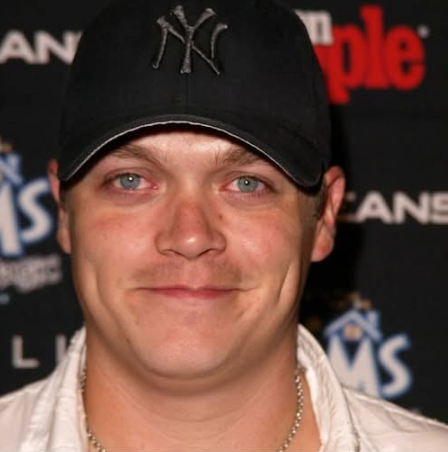
For more than twenty-five years, Brad Arnold’s voice has served as a cultural anchor. It is a voice—gravelly, emotive, and instantly recognizable—that powered 3 Doors Down to the summit of the rock world, delivering anthems like “Kryptonite,” “Here Without You,” and “It’s Not My Time.” Throughout his career, Arnold’s lyrics have navigated the choppy waters of vulnerability, perseverance, and resilience. Now, in a cruel twist of fate, those very themes have transitioned from the recording studio to a grueling, deeply personal chapter of his life.
In a move that has sent shockwaves through the music industry, the 3 Doors Down frontman revealed in mid-2025 that he has been diagnosed with stage 4 clear cell renal carcinoma. The diagnosis is made more perilous by the fact that the cancer has metastasized, spreading from his kidneys to his lungs.
The fallout was immediate and necessary: 3 Doors Down has officially scrapped its entire summer 2025 itinerary, silencing a tour that was slated to span the United States and reconnect the band with a multi-generational fanbase.
A Diagnosis That Rewrote the Script
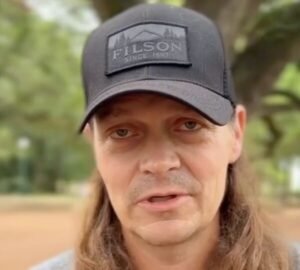
On May 7, 2025, the digital world stood still as Arnold appeared in an unguarded video message shared on Instagram. Speaking directly to his followers, he detailed a harrowing few weeks. After a period of persistent malaise led him to seek hospital evaluation, doctors delivered the sobering news.
In clinical circles, clear cell renal carcinoma is identified as the most prevalent form of kidney cancer in adults. However, the “stage 4” designation carries a heavy clinical weight. It signifies that the disease has traveled beyond its origin to distant organs—in Arnold’s case, the lungs.
Medical experts note that metastatic kidney cancer presents a formidable challenge. While localized cases often see successful intervention, the prognosis shifts dramatically once the disease enters the bloodstream or lymphatic system. Statistical data often cited by oncologists places the five-year survival rate for stage 4 kidney cancer at approximately 10%, a figure that underscores the magnitude of the battle Arnold now faces. Treatment typically involves a grueling regimen of systemic therapies, including immunotherapy and targeted molecular therapy, aimed at stalling tumor progression.
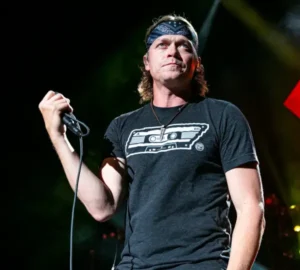
Grace Under Pressure: A Spiritual Anchor
While the medical data is daunting, Arnold’s public posture has been defined by a striking, almost preternatural calm. In his announcement, he did not sugarcoat the reality of the situation, candidly describing the stage 4 outlook as “not real good.” Yet, he pivoted immediately to a message of profound spiritual conviction.
“We serve a mighty God, and He can overcome anything,” Arnold told his fans, his voice steady despite the circumstances. He stated clearly that he is not walking this path in fear, leaning instead into the Christian faith that he has previously credited with helping him navigate the treacherous waters of addiction.
This level of emotional transparency has stripped away the artifice of the “larger-than-life rock star.” By asking his global audience to “lift me up in prayer every chance you get,” Arnold has invited his fans into his most vulnerable moment, transforming a private tragedy into a shared human experience of hope and spiritual grounding.
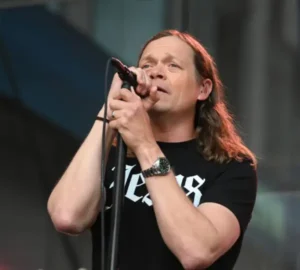
The Silence of the Summer Circuit
The timing of the diagnosis has left a massive void in the 2025 concert season. 3 Doors Down was prepared to launch an ambitious coast-to-coast trek, beginning in Daytona Beach, Florida. The tour was particularly anticipated for its co-headlining dates with fellow post-grunge titans Creed—a pairing that promised a powerful dose of turn-of-the-century nostalgia.
Management has since confirmed the cancellation of all standalone shows, festival slots, and state fair appearances. Prominent venues, including the Alaska State Fair, have already moved into the logistical process of issuing refunds, replaced the roar of the crowd with the quiet urgency of a medical retreat.
For now, the bright lights of the arena have been swapped for the sterile environment of treatment centers and the sanctity of family life. As Arnold begins his fight against the odds, the rock community remains in a state of watchful waiting, hoping that the man who gave voice to perseverance can find enough of it to see him through to the other side.
To grasp why the world of rock music has fallen into a somber, prayerful hush, one must look past the platinum records and sold-out arenas to the marrow of Brad Arnold’s legacy. For over two decades, the 3 Doors Down frontman has specialized in a specific kind of emotional alchemy. His songwriting—raw, reflective, and unpretentiously honest—forged a lifeline for millions. Anthems like “Kryptonite” and “Here Without You” were never just radio hits; they were companions for the lonely, the grieving, and the resilient.
Today, those poetic themes of struggle and faith have ceased to be metaphorical. They are playing out in real-time, echoing with a haunting, new-found gravity as Arnold navigates a diagnosis that has turned his own lyrics into a prophetic soundtrack for his life.

The Clinical Reality: Decoding Stage 4 ccRCC
In the medical community, clear cell renal cell carcinoma (ccRCC) is known as a formidable adversary. Originating in the waste-filtering cells of the kidney, it is the most aggressive and common subtype of kidney cancer, accounting for roughly 80% of adult cases. While early detection often allows for surgical intervention and a positive prognosis, the landscape shifts dramatically once the disease “metastasizes.”
For Arnold, the cancer has reached Stage 4, meaning it has migrated beyond the kidney to his lungs. At this juncture, the treatment plan transforms from localized surgery into a complex, systemic “cocktail” of modern medicine:
Immunotherapy: High-tech biological agents designed to “unmask” cancer cells so the body’s own immune system can go on the offensive.
Targeted Therapy: Precision medications that attack the specific molecular pathways that allow tumors to grow.
Palliative Radiation & Surgery: Utilized not as a cure, but as a tactical measure to shrink tumors and alleviate pain.
Despite these medical strides, the statistical reality remains sobering. The five-year survival rate for metastatic ccRCC hovers near 10%. It is a clinical mountain that would break many, yet it is one Arnold is climbing with a public composure that has stunned his peers.
A Virtual Vigil: The Music Community Rallies
The response to Arnold’s transparency has been nothing short of a global movement. On social media, the traditional divide between “rock star” and “fan” has evaporated, replaced by a virtual vigil. Fellow musicians, ranging from arena-filling peers to artists outside the rock genre, have stood in solidarity, acknowledging a man whose impact on the industry transcends the charts.
Perhaps most moving are the testimonials from fans who are currently navigating their own cancer journeys. They have found a peculiar strength in Arnold’s vulnerability. By sharing his “no fear” mindset so candidly, he has effectively stripped the stigma from the illness, replacing the “battle” narrative with one of profound human connection.
The Warrior and the Word: Faith as Armor
Throughout this ordeal, two pillars have remained immovable in Arnold’s life: his faith and his family. He has frequently credited his wife—whom many in his inner circle describe as a “warrior”—with being the logistical and emotional anchor of his recovery.
At 46, Arnold is demonstrating a model of strength that challenges the cultural obsession with “winning at all costs.” Instead, his focus is on spiritual peace and psychological resilience. In his recent announcements, he noted that he has found himself listening to his own 2008 hit, “It’s Not My Time.” The song, written about defying fate and embracing life in the shadow of fear, has become his personal mantra.
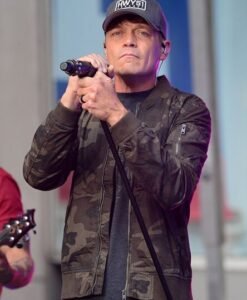
An Uncertain Horizon
The road ahead for Brad Arnold is marked by careful monitoring and the unpredictable ebb and flow of advanced oncology. While the path is fraught with uncertainty, there is a glimmer of hope in the evolving science of immunotherapy. Recent years have seen some Stage 4 patients achieve long-term disease control—outcomes once considered impossible.
For now, the touring schedule of 3 Doors Down remains on indefinite hiatus. But in a sense, the music has never been more active. Lyrics that once scored teenage road trips are now serving as emotional armor for a man fighting for his life.
Arnold’s story is no longer a spectacle of celebrity; it is a raw, unfolding narrative of courage. He is no longer just the voice behind “Kryptonite.” He is a husband, a believer, and a man facing his mortality with a grace that has turned his most difficult chapter into his most powerful performance. The melody of hope continues, and as Arnold himself suggests, the song is far from over.