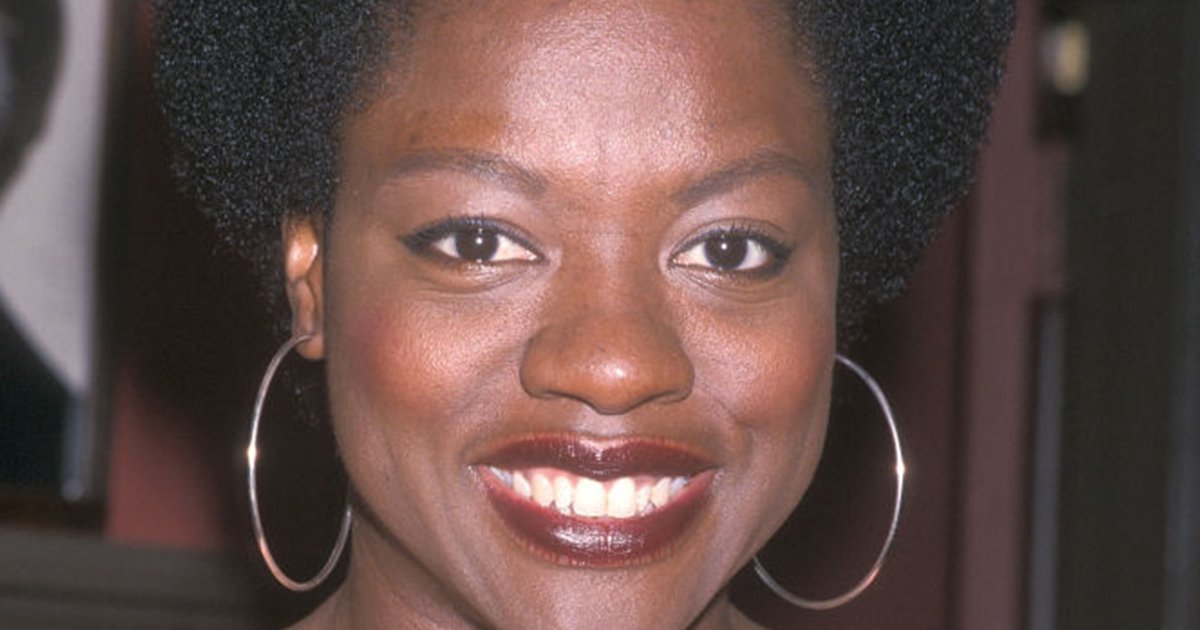
In the annals of Hollywood history, few ascensions are as improbable as that of Viola Davis. Today, at 59, she is regarded as a definitive powerhouse of the craft—an actress whose name is synonymous with prestige and raw, emotional honesty. Yet, for Davis, the path to the red carpet began in a one-room shack on a South Carolina plantation, and the only surviving artifact of her early childhood is a solitary kindergarten photograph—a haunting visual anchor for a girl who learned the vocabulary of “lack” before she could read.
Born August 11, 1965, in St. Matthews, South Carolina, Davis entered a world where the dirt beneath her feet carried the heavy history of her grandmother’s farm. Though the Civil Rights Act had been signed into law just a year prior, the 1.29-square-mile town remained a stronghold for the remnants of Jim Crow.
“People wouldn’t drink out of the same water faucet after us,” Davis recalled of the era. “There was a lot of name-calling and expletives.”
Survival in a Condemned Building
The second youngest of six siblings, Davis eventually moved with her family to Central Falls, Rhode Island, while her two eldest siblings remained behind in the care of their grandparents. The relocation offered no reprieve from hardship. The family took up residence in a condemned building that lacked functional plumbing and heat, forcing a constant, desperate war against rat infestations.
Hunger was not merely a threat; it was a permanent member of the household. As the family’s food stamps frequently evaporated before month’s end, Davis was forced into a survivalist mindset that few of her future peers could imagine.
”Let me tell you something about poverty: You’re invisible. Nobody sees the poor. You have access to nothing. You’re no one’s demographic,” Davis once shared, reflecting on the profound isolation of the impoverished.
The Ninth Year: A Profound Awakening
By the age of nine, the desperation of hunger drove Davis to a breaking point. She was caught stealing food from a local store, an encounter that left a permanent scar on her psyche.
”The store owner screamed at me to get out, looking at me like I was nothing,” she later recounted.
That same year marked what Davis describes as a “profound awakening” born of domestic trauma. She vividly remembers a moment when the volatile conflict between her parents escalated to such a degree that she was overcome by a primal, unstoppable grief.
”I started screaming at the top of my lungs, and I couldn’t stop,” she remembers. As her older sister, Dianne, urged her to move inside to avoid the judgmental gaze of the neighborhood, the young girl remained gripped by an internal anguish that would eventually become the wellspring of her legendary acting performances.
For Davis and her siblings, the school system provided the only reliable nutrition they received. She recalls strategically befriending classmates whose mothers provided three consistent meals, lingering at their homes for as long as possible just to escape the void of her own kitchen.
Davis’s journey from a South Carolina shack to the pinnacle of her profession is more than a success story; it is a searing indictment of the “invisibility” she once fought against and a testament to a resilience that refused to remain unseen.
There is a moment in the childhood of Viola Davis that reads like a scene from one of her most harrowing films. A young girl, consumed by the chaos of a home marked by domestic violence and chronic hunger, ran into a bathroom, collapsed onto the floor, and screamed a desperate ultimatum to the heavens.
“God! If you exist, if you love me, you’ll take me away from this life! Now I’m going to count to 10, and when I open my eyes, I want to be gone! You hear me?!”
She counted slowly, her eyes squeezed shut with raw, unadulterated belief. When she reached ten and opened them, the condemned walls of her Central Falls home remained. Nothing had changed. Yet, looking back from the vantage point of a 59-year-old icon, Davis realizes that God did not take her away for a reason.
“He left me right there so when I gained vision, strength, and forgiveness, I could remember,” she reflects. “I could remember what it means to be a child who dreams and sees no physical manifestation of it. I could remember because I lived it. I was there.”

A Path Predetermined by History
For a long time, Davis believed her destiny was written in the stained, unwashed clothes she wore to school. Coming from a lineage of disenfranchised women, she viewed her future through a narrow, historical lens.
”I knew I was going to be a maid because my mother was a maid and my grandmother was a house slave,” Davis said. In the South of her mother’s era, domestic service wasn’t just a job; it was the only door left unlocked for Black women.
However, the cycle of poverty met an immovable force: the American education system. While her home life was defined by an abusive, alcoholic father and a “complete absence of love,” school became a sanctuary. Davis and her siblings immersed themselves in everything from sports to drama. By age seven, she was already co-writing skits for local talent shows, finding an escape in the greasepaint that the world of Central Falls couldn’t provide.
The Juilliard Breakthrough
The turning point came via the Upward Bound program and a theater scholarship to Rhode Island College. Her talent was so undeniable that one professor described her as “a talent that doesn’t come down the pike very often.”
When Davis auditioned for Juilliard, she was vying for a spot in an institution that groomed legends like Robin Williams and Aretha Franklin. She secured one of only 14 positions out of a pool of 2,500 applicants. This was the beginning of the end of her “invisibility.” At 29, she earned her first Tony nomination for August Wilson’s Seven Guitars. That opening night, watching her father cry in the audience, Davis felt she had finally “arrived.”
Making History in Hollywood
The transition to the screen was equally meteoric. Her first Oscar nod for Doubt (2008) was followed by a leading role in The Help (2011). In 2015, she shattered the glass ceiling, becoming the first Black woman to win the Emmy for Outstanding Lead Actress in a Drama Series for How to Get Away with Murder. An Academy Award for Fences (2016) soon followed, making her one of only three African-American actresses—alongside Whoopi Goldberg and Angela Bassett—to be nominated in both Lead and Supporting categories.
But for Davis, the accolades are secondary to the advocacy. Haunted by her own empty stomach, she became a champion for the Hunger Is campaign, helping raise over $4.5 million for childhood nutrition.
“This is the richest country in the world,” she remarked. “There’s no reason kids should be going to school hungry.”

Healing the Little Girl
In her searingly honest memoir, Finding Me, Davis peels back the layers of shame that followed her from the condemned buildings of her youth. She speaks openly about her father, a horse-groomer whose struggles with alcoholism and infidelity created a volatile environment for his six children.
Today, Davis has built the stable, loving life she once prayed for in that bathroom. Married to actor-producer Julius Tennon and mother to their daughter, Genesis, she has found a sense of peace that eluded her for decades.
In a powerful act of reclamation, Davis celebrated her 55th birthday in 2020 by purchasing the very house in South Carolina where she was born. “The above is the house where I was born… Today on my 55th year of life… I own it… all of it,” she shared with her followers.
For Viola Davis, the journey hasn’t been about running away from that screaming girl on the bathroom floor, but going back to save her. “That’s the little girl who follows me all the time,” she told People. “I always feel like I have to go back and heal her.”
From unimaginable hardship to a legacy of resilience, Viola Davis remains a voice for the forgotten and a testament to the power of the human spirit.