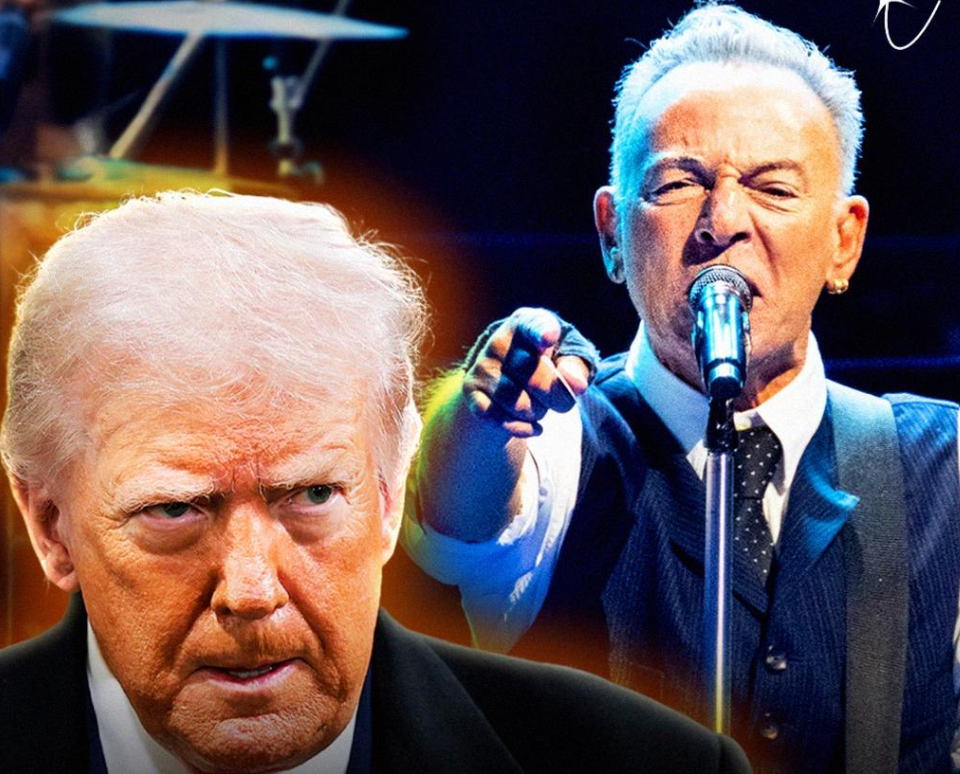
In a raw, emotionally charged moment that has reverberated far beyond the Jersey Shore, Bruce Springsteen utilized the stage of the Light of Day Winterfest to deliver a blistering indictment of recent federal actions, placing himself once again at the vanguard of America’s cultural and political divide. The “Boss,” a songwriter whose decades-long career has been defined by his ability to articulate the struggles of the American working class, paused his set just before the opening chords of The Promised Land. What followed was not a typical stage banter, but a pointed address regarding what Springsteen described as a “critical strain” on the nation’s democratic foundation.
“Militarized” Cities and the Ghost of Renee Good
Speaking to a hometown crowd, Springsteen directed his ire toward the increasingly militarized federal presence in Minneapolis. The city has been a tinderbox following a lethal Immigration and Customs Enforcement (ICE) operation that claimed the life of Renee Nicole Good, a local mother and U.S. citizen.
Springsteen framed the deployment of armed federal agents in American municipalities as a dangerous escalation and a “troubling example of government overreach.” He argued that the tactics currently being utilized against civilians represent a departure from the accountability that defines a free society.
“Dissent and protest should never be met with deadly force,” Springsteen told the hushed crowd. His remarks aligned him with Minneapolis Mayor Jacob Frey, who has engaged in a public standoff with the administration, demanding the immediate withdrawal of federal agents from his city.
In a poignant gesture, Springsteen dedicated the evening’s performance of The Promised Land to the memory of Renee Good. The dedication triggered a deafening roar of applause, reinforcing the artist’s reputation for standing with “ordinary people” during times of national trauma.
A Nation on Standby
The gravity of Springsteen’s rhetoric was underscored by developments unfolding simultaneously at the Pentagon. Reports have surfaced that National Guard units have been placed on standby in anticipation of potential civil unrest linked to federal enforcement actions. While defense officials characterized the move as a standard precautionary measure, the deployment has only intensified the sense of a nation on the brink.
Springsteen’s critique is part of a consistent ideological arc. The rock legend has been a vocal adversary of Donald Trump, frequently describing the administration’s leadership as a direct threat to civil rights and democratic norms. By taking this stance in New Jersey, Springsteen has once again positioned his music as a soundtrack for political resistance.
The White House Fires Back
The administration moved quickly to counter the narrative flowing from the Winterfest stage. White House Press Secretary Abigail Jackson issued a statement defending the ICE operations, asserting that federal agents possess an inherent right to self-defense while executing their duties in hostile environments.
“Federal officers face increasing risks,” Jackson stated, emphasizing the administration’s unwavering commitment to its “law and order” platform. While the President did not address Springsteen by name, the White House response made it clear that the administration views such criticism as an impediment to national security and immigration enforcement.
The Artist as an Activist
The incident has reignited the perennial debate regarding the role of entertainers in the political sphere. While Springsteen’s supporters praise his courage for using his massive platform to challenge authority, detractors argue that high-profile artists should refrain from alienating portions of their audience with partisan commentary.
However, in the current climate of 2026, the divide appears too deep for such neutrality. As the clash between federal authority and local governance intensifies, figures like Springsteen are no longer just performers; they are participants in a high-stakes struggle over the soul and direction of the country.