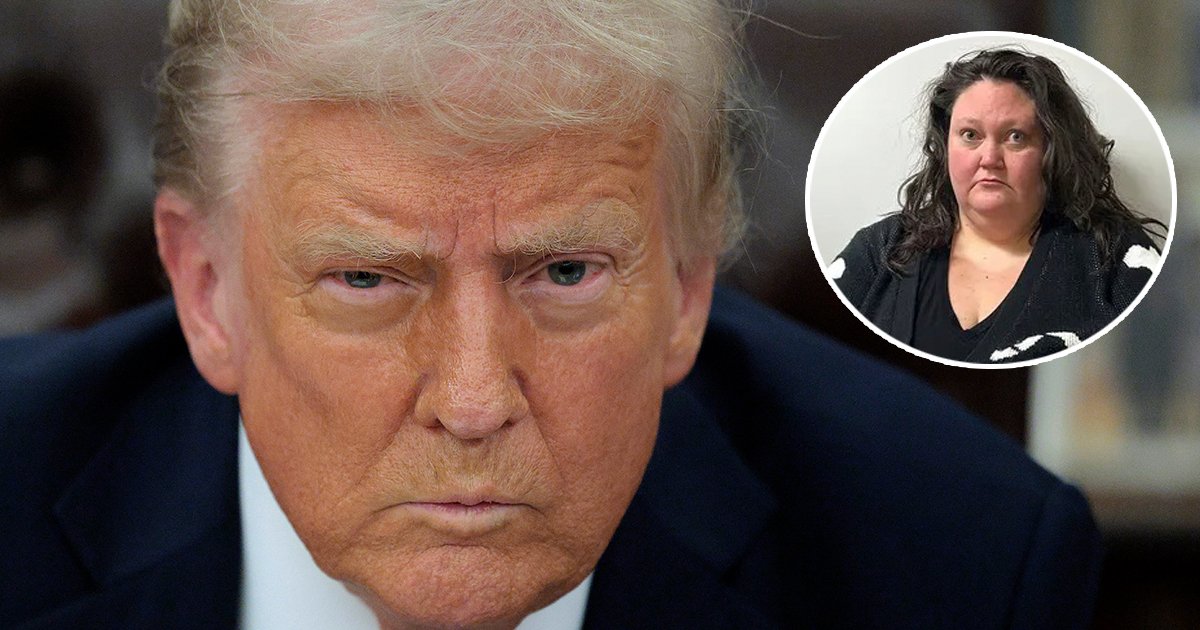
A quiet community in Jackson County has been thrust into the national spotlight following the arrest of a local librarian accused of utilizing social media platforms to solicit the assassination of President Donald Trump. Local authorities confirmed the arrest Monday, marking a significant escalation in the ongoing struggle to police violent political rhetoric in the digital age.
Morgan L. Morrow, 39, an employee of the Jackson County Public Library, now faces one count of making a terroristic threat. The arrest, spearheaded by the Jackson County Sheriff’s Department, follows a weekend investigation into digital content that officials say crossed the Rubicon from protected speech into criminal solicitation.
”When you saddle up on the horse of stupidity, you have to be prepared for the ride that follows,” Sheriff Ross Mellinger told 13 News in a characteristically blunt assessment of the situation.
Meet Morgan L. Morrow, a librarian at Jackson County Public Library in West Virginia. She appears to call for someone to ass*ssinate Trump while other commenters call to also kiII Stephen Miller, Larry Ellison, and Peter Thiel.
Our tax dollars pay her salary.
You can contact… pic.twitter.com/BrIZG9TlWA
— Libs of TikTok (@libsoftiktok) January 25, 2026
From Rhetoric to “Recruitment”
The investigation centers on a disturbing video posted to Instagram and TikTok. According to a formal statement released Sunday evening, the Sheriff’s Department alleges that Morrow engaged in the “social media recruitment of individuals to pursue and assassinate President Trump.”
The alarming centerpiece of the prosecution’s case is a caption allegedly authored by Morrow, which read: “Surely a sniper with a terminal illness cannot be a big ask out of 343 million.”
The digital trail didn’t end there. Investigators noted that the comment section of the post quickly devolved into a breeding ground for further violence, with users allegedly expanding the “hit list” to include other high-profile figures such as White House Deputy Chief of Staff for Policy Stephen Miller, Oracle co-founder Larry Ellison, and entrepreneur Peter Thiel.
Admission and Intent
According to reports from the Daily Mail, Morrow allegedly admitted during a police interview that she was the author of the TikTok post. Furthermore, she reportedly confessed that the statement was “intended as a threat directed toward President Trump,” citing “personal reasons” for wishing harm upon the Commander-in-Chief. The criminal complaint did not specify the nature of these personal grievances.
While Morrow reportedly insisted to investigators that she had no personal plan to physically act on the threat, the Sheriff’s Department argued that the danger lies in the power of suggestion. Police stated that her rhetoric could “encourage, inspire, or entice others to carry out the threatened act,” a legal standard that holds the speaker accountable for the potential actions of an audience.
“We’re just trying to do our part in making sure that it’s not acted upon, and there’s no one that’s following her footsteps to try to carry out the plan,” Sheriff Mellinger added.
Institutional Distancing
The Jackson County Public Library moved swiftly to distance itself from the embattled staff member. In a public statement, the organization emphasized that Morrow’s alleged comments were made in her “individual capacity” and do not represent the values of the institution.
“The comments recently made by an employee do not reflect the mission, values, or standards of conduct of our organization,” the library stated. “We are addressing the matter internally in accordance with our established policies and procedures.”
A Context of Growing Threats
This arrest occurs against a backdrop of increasing threats against President Trump. The history of attempts on his life is long and increasingly violent:
2016: A thwarted attempt at a Las Vegas rally during his first campaign.
2017–2021: Multiple disrupted plots during his first term.
2024: The most severe incident to date, where a gunman opened fire at a Pennsylvania rally, killing a spectator and wounding the President in the right ear.
As Morrow awaits further legal proceedings, federal authorities, including the Department of Homeland Security, have yet to issue a formal statement. However, the case serves as a somber reminder of the severe legal consequences of directed threats against a sitting or former president, particularly as the reach of social media continues to complicate national security.