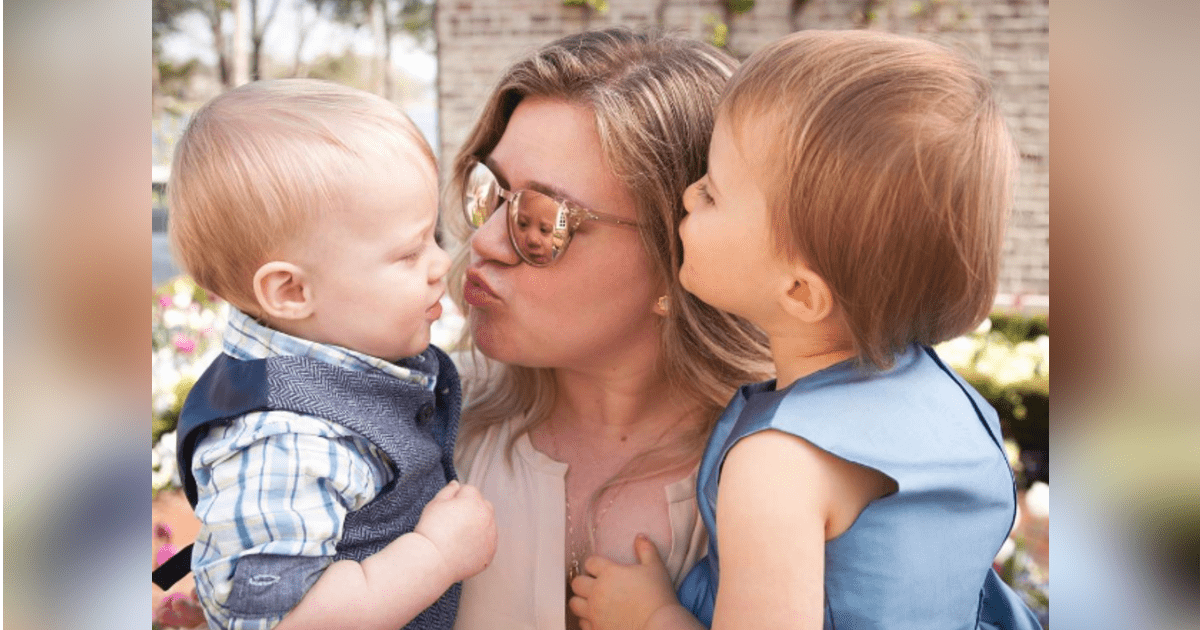
In the evolving landscape of 21st-century parenting, few topics ignite as much visceral reaction as the use of corporal punishment. While the American Academy of Pediatrics (AAP) has issued definitive conclusions stating that spanking is both ineffective and psychologically harmful, a significant cultural divide persists. At the center of this firestorm is global superstar Kelly Clarkson, who has sparked a nationwide dialogue by doubling down on her traditional, “Southern-style” approach to discipline. A decade of reporting on family dynamics and celebrity culture has shown me that public figures rarely court controversy regarding their children. Yet, Clarkson—an accomplished singer, songwriter, author, and recipient of a star on the Hollywood Walk of Fame—has chosen a path of radical transparency regarding how she raises her two children, River Rose and Remington Alexander.
A Texas Upbringing: Tradition vs. Modern Pedagogy
During a candid radio interview that has continued to circulate among parenting circles, the American Idol alumna made it clear that she is “not above spanking” when it comes to maintaining order in her household. For Clarkson, the practice isn’t rooted in malice, but in a cultural heritage she traces back to her roots in the American South.
“I’m from the South, y’all, so we get spankings,” Clarkson remarked, noting that her own parents utilized the practice. Far from feeling traumatized by her upbringing, she credits it with her development into a successful adult. “I’m a well-rounded individual with a lot of character, so I think it’s fine,” she argued, pointing out that her mother went as far as granting school principals permission to administer corporal punishment if she stepped out of line.
The ‘Zoo’ Scenario: Navigating Public Scrutiny
The tension between traditional methods and modern social norms becomes most acute in the public eye. Clarkson admitted that disciplining her children in communal spaces is “tricky,” precisely because of the shifting perception of what is considered acceptable parenting.
“People are like—they think that’s wrong or something, but I find nothing wrong with a spanking,” Clarkson stated defiantly. She went as far as to suggest that her commitment to this method is unwavering, regardless of the setting: “I do believe in spanking, so you might catch me spanking my child at the zoo.”
However, the singer was quick to clarify her process. She describes her approach as a measured escalatory tactic rather than an impulsive reaction. She employs a clear warning system, telling her children: “Hi, I’m going to spank you on your bottom if you don’t stop right now, this is ridiculous.” According to Clarkson, the mere threat of the “little spanking” has proven to be an effective deterrent, leading to a noticeable improvement in her children’s behavior.
The Clinical Counterpoint
While Clarkson’s testimony resonates with those who believe in “common-sense” traditionalism, it stands in stark contrast to current medical consensus. The AAP’s stance remains firm: physical discipline can lead to increased aggression, brain structure changes, and long-term behavioral challenges. This creates a fascinating journalistic paradox—a beloved public figure advocating for a practice that the medical establishment has formally denounced.
The Editorial Verdict: Who Governs the Household?
Kelly Clarkson’s openness has pulled back the curtain on a reality many parents are hesitant to discuss: the gap between clinical recommendations and personal experience. By leaning into her Texas roots, Clarkson is challenging the notion that there is a “one-size-fits-all” manual for raising children.
Does a parent’s right to discipline as they see fit trump the evolving standards of pediatric health? Or is Clarkson’s “character-building” approach an essential tool in an increasingly permissive world?