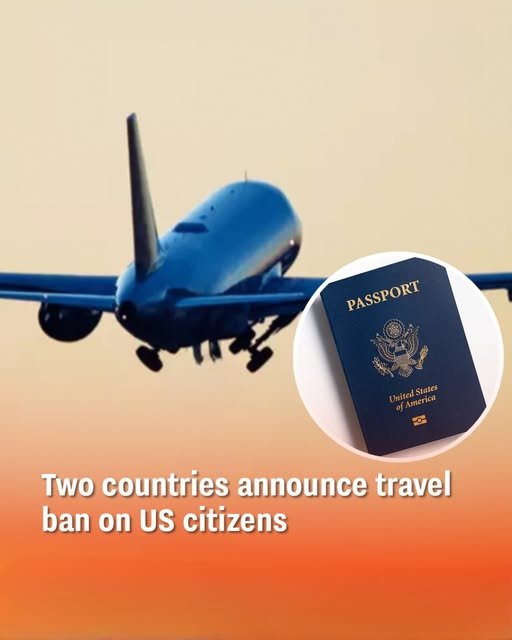
The geopolitical landscape has been plunged into a state of high tension following the announcement that multiple nations are imposing strict travel bans on U.S. citizens. Citing “reciprocity” and “national sovereignty,” these governments are moving to mirror the restrictive immigration policies recently expanded by the Trump administration. This escalating cycle of retaliation is currently reshaping international relations, leaving travelers, multi-national businesses, and humanitarian organizations caught in a deepening web of uncertainty.
The Catalyst: An Expanded U.S. Restriction Regime
Since his return to the White House, President Donald Trump has aggressively re-prioritized border enforcement and immigration control. Earlier this month, the administration announced a significant expansion of its travel ban list, which now encompasses 39 countries—one of the broadest and most stringent restriction regimes in modern American history.
The White House maintains that these policies are essential national security measures, designed to compel foreign governments to adopt more rigorous document security and information-sharing protocols. However, the move has drawn sharp criticism from international advocacy groups and diplomatic peers who view the measures as a form of collective punishment and a catalyst for global economic disruption.
Nations Under the Ban: Full vs. Partial Restrictions
The U.S. policy bifurcates affected nations into two primary categories:
Comprehensive Bans: Countries including Afghanistan, Burma, Chad, Congo, Eritrea, Haiti, Iran, Libya, Somalia, Sudan, Yemen, and Syria face near-total visa suspensions. In these instances, entry for citizens is barred with only the most limited of legal exceptions.
Partial Restrictions: Nations such as Angola, Nigeria, Tanzania, and Zambia are subject to partial bans, which target specific visa categories while allowing others to remain active.
U.S. officials argue these designations respond to specific deficiencies in the security standards of the targeted nations. Conversely, the lack of transparency in the evaluation process has become a major point of contention for foreign ministries.
The Retaliation: Reciprocal Bans and Strategic Fallout
The international response has been swift and severe. Mali and Burkina Faso have officially implemented reciprocal restrictions on U.S. passport holders, framing the move as a necessary defense of sovereignty. Niger has escalated the standoff further, announcing a permanent ban on the issuance of visas to Americans, following in the footsteps of Chad, which had previously suspended visa services for U.S. citizens.
These retaliatory measures pose an immediate threat to U.S. strategic partnerships, particularly in regions where American aid workers, journalists, and security consultants operate. The breakdown in mobility is hampering everything from counter-terrorism cooperation to critical infrastructure projects.
The Border Tech Surge: Biometrics and Privacy
Parallel to the travel bans, the Trump administration has introduced heightened biometric data collection at major U.S. ports of entry. The new protocols include facial recognition and the potential collection of fingerprints or DNA samples for non-citizens. While the Department of Homeland Security claims these tools are vital for modern border defense, privacy advocates are sounding the alarm over the ethics of long-term data retention and the potential for surveillance overreach.
Global Warnings and a Shifting Future
The ripples of these policy shifts are being felt even among traditional American allies. European governments, including the United Kingdom and Germany, have issued formal warnings to their citizens. These advisories emphasize that holding a valid visa or an approved ESTA (Electronic System for Travel Authorization) no longer guarantees entry into the United States, as CBP officers exercise increased discretionary authority.
As internal memos suggest the U.S. may soon add even more countries to the restricted list, the era of predictable global mobility appears to be fading. In its place is a new reality defined by biometric controls, shifting alliances, and a “policy of retaliation” that challenges the very foundations of international travel and security cooperation.